
Water Treatment Plant in Kochi: Types, Process, Applications & Cost Factors
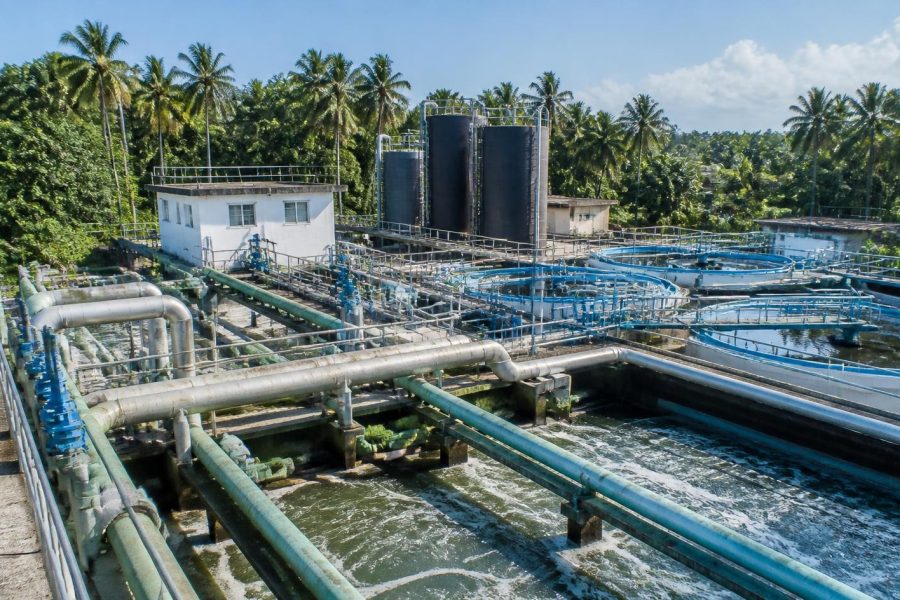
A water treatment plant in Kochi is designed to treat raw water and make it suitable for a specific purpose, such as drinking, domestic use, commercial operations, industrial processes, or institutional applications.
The right treatment system depends on factors such as raw-water quality, contaminants, required water capacity, intended use, and treated-water quality requirements. This is why water testing should be carried out before selecting a treatment technology.
Charcol Water provides customized water treatment solutions in Kochi for residential, commercial, and industrial applications. Its treatment systems are designed according to water-analysis results and the specific requirements of each project.
Quick answer: There is no single water treatment plant suitable for every location. A properly designed WTP combines the appropriate treatment technologies based on water quality, capacity, application, and treatment objectives
- A water treatment plant is designed according to raw-water quality and the intended application.
- Water testing should be completed before selecting a WTP technology.
- Domestic, commercial, industrial, and drinking-water applications can require different treatment configurations.
- RO, water softening, DM systems, filtration, and disinfection are different treatment technologies with different purposes.
- The cost of a water treatment plant in kochi depends on water quality, capacity, treatment technology, automation, installation, and maintenance requirements.
- Professional design helps ensure the treatment system is appropriately sized, practical to operate, and suitable for long-term use.
What Is a Water Treatment Plant?
A water treatment plant is a combination of treatment processes and equipment used to improve the quality of raw water.
Depending on the source and intended use, a WTP may address:
- Suspended solids
- Turbidity
- Excess hardness
- Iron and other minerals
- Dissolved salts
- Unwanted colour and odour
- Microbiological contaminants
- Organic and inorganic impurities
The treatment process is not identical for every location. Borewell water, well water, municipal water, surface water, and industrial process water can require different treatment approaches.
This is why water testing is an important first step before designing a water treatment system.
Why Is Water Testing Important Before Installing a WTP?
Water that looks clear is not necessarily suitable for every application.
A laboratory analysis can identify parameters such as:
- pH
- TDS
- Turbidity
- Total hardness
- Calcium
- Magnesium
- Iron
- Chloride
- Sulphate
- Fluoride
- Nitrate
- Total coliforms
- E. coli
- Conductivity
The required parameters depend on the intended application and the source-water characteristics.
Charcol’s water testing division offers drinking-water, wastewater, industrial application, swimming-pool and other specialized water analysis services. Its WTP service page also states that treatment systems are customized based on the water analysis report.
Practical takeaway: Don’t select an RO plant, softener, filter or other treatment technology simply because it is popular. First identify what needs to be removed or controlled.
How Does a Water Treatment Plant Work?
A water treatment plant normally uses multiple treatment stages rather than one single filter.
A simplified treatment sequence can look like:
Raw Water → Pre-Treatment → Filtration → Specific Treatment → Disinfection → Treated Water Storage → Distribution
The actual configuration can change according to water quality and application.
1. Raw Water Collection
Water enters the treatment system from a source such as:
- Borewell
- Open well
- Municipal supply
- Surface water
- Storage tank
- Industrial water source
The source and raw-water characteristics determine the initial treatment requirements.
2. Pre-Treatment
Pre-treatment protects downstream equipment and improves treatment efficiency.
Depending on the water quality, this may include:
- Screening
- Sediment filtration
- Multimedia filtration
- Pressure sand filtration
- Activated carbon filtration
- Iron removal
- Other specialized filtration
3. Water Softening
If excessive hardness is present, a water softener may be incorporated into the treatment process.
Softening primarily addresses hardness-causing minerals and helps reduce scale formation in:
- Pipes
- Boilers
- Heat exchangers
- Water heaters
- Industrial equipment
4. Reverse Osmosis
Reverse osmosis (RO) can be used when dissolved salts and other contaminants need to be reduced.
RO systems are commonly used in:
- Commercial facilities
- Hotels
- Hospitals
- Industries
- Laboratories
- Apartments
- Drinking-water applications
5. Demineralization
Some industrial and laboratory applications require water with very low mineral content.
A DM water plant may therefore be incorporated where demineralized water is required, including certain industrial and laboratory applications.
6. Disinfection
Depending on the application, disinfection may be used to control microorganisms.
The selected method depends on the water quality, treatment design and intended end use.
7. Treated Water Storage and Distribution
After treatment, the water may be stored and distributed to the required points of use.
The storage and distribution system should also be considered during WTP design because contamination can occur after treatment if tanks, pipelines or handling systems are not appropriately maintained.
Types of Water Treatment Plants in Kochi, Kerala
There is no single WTP configuration that is suitable for every application.
1. Domestic Water Treatment Plants
Domestic WTP systems are designed for:
- Homes
- Villas
- Homestays
- Residential properties
The treatment may address issues such as turbidity, hardness, iron, microbial contamination or dissolved solids depending on the water analysis.
2. Commercial Water Treatment Plants
Commercial systems can be used in:
- Restaurants
- Offices
- Schools
- Colleges
- Hotels
- Clinics
- Commercial buildings
The design must consider daily water consumption, peak demand and the quality required for different uses.
3. Industrial Water Treatment Plants
Industrial WTP systems are designed for larger water requirements and specific process-water needs.
Potential applications include:
- Manufacturing facilities
- Hospitals
- Hotels and resorts
- Factories
- Boilers
- Cooling systems
- Process-water applications
Industrial treatment often requires a combination of technologies rather than a single filtration stage.
4. Drinking Water Treatment Plants
These systems are designed to improve raw water for drinking-water applications.
Treatment selection depends heavily on the source-water analysis and applicable drinking-water requirements. Kerala’s Department of Environment and Climate Change lists IS 10500:2012 under its environmental standards resources for drinking water.
5. Specialized Water Treatment Systems
Some applications require specialized treatment rather than a conventional WTP.
Examples include:
- RO plants
- DM water systems
- Water softeners
- Iron removal systems
- Chemical dosing systems
- Advanced filtration systems
Charcol currently offers these technologies as part of its broader water-treatment portfolio.
Water Treatment Plant Applications
A properly designed WTP can support different sectors.
Homes and Residential Communities
Treatment systems can be designed for households, villas and residential communities using well, borewell or other water sources.
Hotels and Resorts
Hotels may require substantial quantities of treated water for:
- Guest rooms
- Kitchens
- Laundry
- Housekeeping
- Swimming pools
- General operations
Hospitals
Hospitals can have demanding water-quality requirements and may require multiple treatment stages depending on the application.
Educational Institutions
Schools, colleges and other institutions may need reliable treatment for drinking water and general usage.
Restaurants and Food Businesses
Water quality is important for food preparation, cleaning and drinking-water requirements.
Manufacturing Industries
Industrial facilities may need treated water for production, boilers, cooling systems, cleaning and other processes.
Laboratories
Laboratories may require specialized water-quality levels, including demineralized or otherwise treated water.
Why Choose Charcol Water for Water Treatment Solutions in Kochi?
Choosing a WTP should not be based only on the brand or equipment price.
Consider these factors:
1. Test the Raw Water
Start with a laboratory water analysis.
2. Identify the Intended Use
Determine whether the treated water will be used for:
- Drinking
- Domestic purposes
- Food processing
- Industrial production
- Boiler feed
- Cooling
- Laboratory applications
3. Calculate Required Capacity
The plant should be sized according to actual water demand.
Important factors include:
- Litres per day
- Litres per hour
- Peak consumption
- Operating hours
- Storage capacity
- Future expansion
4. Select the Treatment Technology
The water analysis should determine whether the system needs:
- Sediment filtration
- Activated carbon
- Softening
- Iron removal
- RO
- DM
- Disinfection
- Chemical dosing
- A combination of technologies
5. Consider Maintenance
A treatment plant is not a one-time purchase.
Filters, membranes, pumps, valves, dosing systems and other components may require inspection, cleaning, replacement or servicing.
6. Consider Water Recovery and Waste
For systems such as RO, water recovery and reject-water management should be considered during system design.
A technically suitable plant should also be practical to operate and maintain.
Water Treatment Plant Cost in Kochi: What Determines the Price?
One of the most common searches is:
“How much does a water treatment plant cost in Kochi?”
There is no single reliable price because WTP projects are customized.
The major cost factors include:
Raw Water Quality
More complex contamination generally requires more treatment stages and equipment.
Treatment Capacity
A small domestic system and a high-capacity industrial WTP have very different equipment requirements.
Treatment Technology
A basic filtration system can have significantly different costs from a system incorporating RO, softening, DM or advanced treatment.
Automation
Manual, semi-automatic and fully automated systems can have different capital and operating costs.
Equipment and Materials
Pumps, membranes, filter vessels, piping, control panels, valves and other components influence the project cost.
Installation Requirements
Civil work, electrical connections, piping, storage tanks and site conditions can affect the overall project budget.
Operation and Maintenance
The initial purchase price is only part of the total cost. Consumables, electricity, replacement filters, membranes, chemicals, labour and servicing should also be considered.
For an accurate WTP cost estimate, a site assessment and water analysis are more useful than a generic online price.
WTP vs RO Plant: Are They the Same?
No.
A water treatment plant is a broader treatment system that can incorporate several technologies.
Reverse osmosis (RO) is one specific water-treatment technology.
For example, a treatment plant could contain:
Raw Water → Sand Filter → Activated Carbon → Softener → RO → Disinfection → Treated Water
The exact configuration depends on the water analysis and intended application.
Therefore, searching only for an “RO plant” may not be enough when the raw water has multiple quality issues.
Water Treatment Plant vs Wastewater Treatment Plant
These terms should also not be confused.
Water Treatment Plant — WTP
Generally treats raw water to produce water suitable for a particular use.
Sewage Treatment Plant — STP
Treats sewage and domestic wastewater.
Effluent Treatment Plant — ETP
Treats industrial wastewater or effluent.
The treatment objective and process design are different.
Why Professional WTP Design Matters
A water treatment system that is oversized, undersized or incorrectly configured can create unnecessary operating costs and poor treatment performance.
Professional design should consider:
- Laboratory water analysis
- Flow rate
- Treatment objectives
- Equipment selection
- Hydraulic requirements
- Energy consumption
- Water recovery
- Automation
- Installation
- Maintenance
- Future capacity requirements
This is particularly important for commercial and industrial facilities where water quality and continuous availability can directly affect operations.
Why Choose Charcol Water for Water Treatment Solutions in Kerala?
Charcol Water provides customized water and wastewater treatment solutions for residential, commercial and industrial applications.
Its WTP solutions are designed around the client’s water-quality analysis and treatment requirements rather than applying one standard configuration to every project. The company offers domestic, commercial and industrial WTP solutions alongside RO systems, water softeners and DM plants.
Charcol also operates a water-testing division that provides drinking-water, wastewater and industrial water analysis. This creates an important advantage in the treatment process: testing can help identify the actual water-quality problem before selecting the treatment technology.
Charcol Water Treatment Services Include:
- Water Treatment Plants (WTP)
- Reverse Osmosis Systems
- Water Softeners
- DM Water Systems
- Chemical Dosing Systems
- Wastewater Treatment Plants
- Water Testing
- Filter Systems
- AMC and Maintenance Services
Conclusion
Choosing the right water treatment plant in Kerala depends on water quality, capacity, application, and treatment requirements. Professional water testing helps identify the right treatment technology for homes, businesses, and industries.
Charcol Water provides customized water treatment solutions, including WTP, RO, water softening, DM systems, installation, and maintenance across Kerala.
Need a suitable water treatment solution? Contact Charcol Water for professional water testing and system consultation.
Frequently Asked Questions
A water treatment plant is a system that uses one or more treatment processes to improve raw-water quality for a specific application.
Common categories include domestic, commercial, industrial and drinking-water treatment plants. Specialized systems can include RO, softening and demineralization.
There is no universal WTP price. Cost depends on water quality, treatment capacity, technology, automation, equipment, installation and maintenance requirements.
No. RO is only one treatment technology. Whether it is required depends on the raw-water analysis and the required treated-water quality.
Yes. Water testing helps identify the contaminants and characteristics that the treatment system needs to address.
Yes. Borewell water can be treated using an appropriately designed system. However, the required treatment stages should be determined from a water-quality analysis.
COME VISIT US
29/298 A Unichira Thaikavu Road, Changampuzha Nagar, Edapally Ernakulam
SEND US A MESSAGE
General: info@charcol.in Sales: sales@charcol.com