
What Are the Different Types of Water Treatment Plants? A Complete Guide
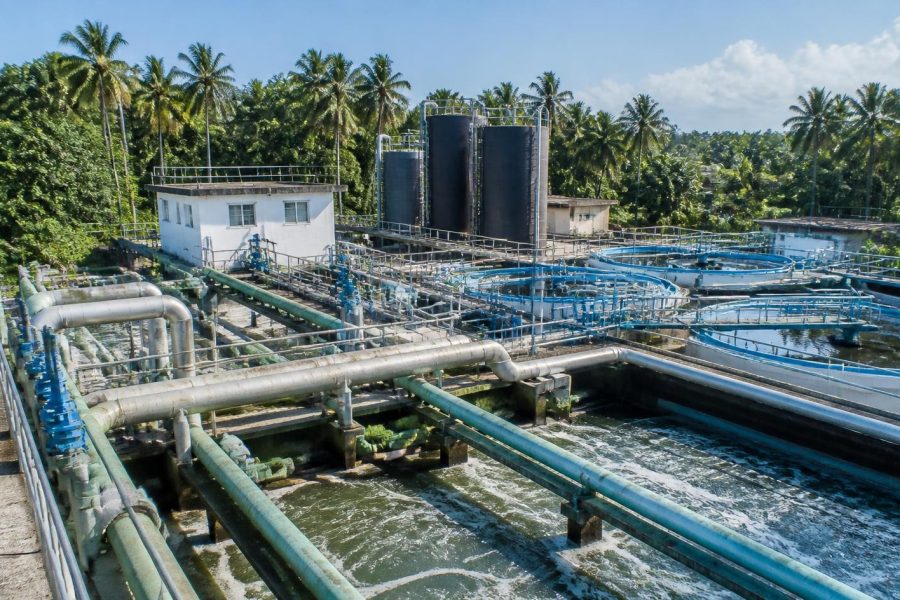
Water treatment plants are engineered systems used to improve water quality by removing or reducing contaminants such as suspended solids, hardness, dissolved salts, microorganisms, organic matter and other pollutants. The treatment process depends on the water source, water quality, required capacity and intended use.
The main types of water treatment plants can be broadly classified according to their purpose and application:
- Drinking Water Treatment Plants – treat raw water to make it suitable for drinking and domestic consumption.
- Domestic Water Treatment Plants – provide treated water for homes, apartments, villas and similar residential applications.
- Commercial Water Treatment Plants – serve restaurants, offices, schools, institutions and other commercial facilities.
- Industrial Water Treatment Plants – produce water suitable for manufacturing, process operations, boilers, cooling systems and other industrial uses.
- Sewage Treatment Plants (STPs) – treat domestic sewage generated by residential, commercial and institutional properties.
- Effluent Treatment Plants (ETPs) – treat wastewater generated by industrial processes.
Treatment technologies such as Reverse Osmosis (RO), water softening, filtration and demineralisation (DM) may be incorporated into these plants depending on the contaminants that need to be controlled.
The most suitable system should be selected based on water analysis, flow requirements and the intended application, rather than choosing equipment based only on a single parameter such as TDS.
What Are the Main Types of Water Treatment Plants?
Water treatment systems can be grouped into several categories based on the source of water and the purpose of treatment.
1. Drinking Water Treatment Plants
Drinking water treatment plants are designed to treat raw water for potable applications.
Depending on the source and water-quality parameters, treatment may include:
- Screening
- Sedimentation
- Filtration
- Activated carbon filtration
- Disinfection
- Softening
- Membrane treatment
- Reverse osmosis where required
The exact process depends on the results of water testing.
2. Domestic Water Treatment Plants
Domestic treatment systems are designed for homes, apartments, villas, homestays and other residential properties.
Depending on the water source, domestic systems may address:
- Turbidity
- Unpleasant taste or odour
- Hardness
- Iron
- Dissolved solids
- Microbiological contamination
A domestic water treatment system should be sized according to household water consumption and the quality of the incoming water.
3. Commercial Water Treatment Plants
Commercial water treatment plants are designed for establishments that require larger volumes of treated water.
Typical applications include:
- Restaurants
- Hotels
- Offices
- Schools
- Educational institutions
- Healthcare facilities
- Resorts
- Other commercial buildings
Commercial systems may combine filtration, softening, RO, disinfection or other treatment technologies depending on the application.
4. Industrial Water Treatment Plants
Industrial water treatment plants are engineered according to the requirements of a specific industrial process.
Industries may require treated water for:
- Manufacturing
- Process water
- Boiler feed
- Cooling systems
- Equipment protection
- Cleaning
- Production operations
Industrial water treatment may involve multiple stages, including filtration, chemical dosing, softening, RO, demineralisation and other specialised processes.
For businesses searching for industrial water treatment in Kochi, water analysis and process requirements should be considered before selecting a treatment technology.
5. Sewage Treatment Plants (STPs)
A Sewage Treatment Plant (STP) is designed to treat domestic wastewater or sewage.
STPs are commonly used in:
- Apartment complexes
- Hotels
- Resorts
- Hospitals
- Schools
- Commercial buildings
- Residential communities
The treatment process is designed to reduce pollutants and organic matter in sewage before treated wastewater is discharged, reused or managed according to applicable requirements.
6. Effluent Treatment Plants (ETPs)
An Effluent Treatment Plant (ETP) is designed primarily for industrial wastewater.
Industrial effluent can vary considerably depending on the manufacturing process and may contain substances such as:
- Suspended solids
- Oils and grease
- Organic pollutants
- Chemicals
- Dissolved solids
- Process-specific contaminants
An ETP is therefore normally designed around the characteristics of the specific industrial wastewater rather than using a single standard treatment process.
Are RO, Water Softeners and DM Plants Different Types of Water Treatment Plants?
This distinction is important.RO systems, water softeners and DM systems are treatment technologies that can form part of a larger water treatment solution. They are selected according to the specific water-quality problem and required output.
Reverse Osmosis (RO) Systems
Reverse osmosis uses a semi-permeable membrane to reduce dissolved salts and other substances from water.
RO systems are commonly considered when water contains elevated levels of:
- Dissolved salts
- TDS
- Certain ions
- Other membrane-removable contaminants
However, high TDS alone does not automatically mean that an RO system is the correct solution. Water analysis and the intended use should determine the treatment approach.
Water Softener Plants
Water softeners are primarily used to reduce water hardness, which is mainly associated with calcium and magnesium.
Hard water can contribute to:
- Scale formation
- Reduced efficiency of water heaters
- Problems in boilers and cooling systems
- Increased soap consumption
- Scaling of pipes and equipment
Softening is different from RO because a softener primarily targets hardness rather than removing all dissolved solids.
Demineralisation (DM) Plants
Demineralisation systems are used when water with a significantly reduced concentration of dissolved mineral ions is required.
DM systems can be considered for applications where mineral content needs to be controlled for industrial or specialised processes.
The choice between DM, RO, softening or a combination of technologies depends on the required water quality.
Why Are Different Water Treatment Plants Needed?
No single treatment method can efficiently address every type of water-quality problem.
Water from different sources can have very different characteristics.
For example:
Borewell water may contain hardness, iron, dissolved solids or other groundwater-related contaminants.
Surface water may contain suspended solids, turbidity and microorganisms.
Municipal water may require additional treatment depending on its quality and intended use.
Industrial wastewater may contain chemicals, oils, organic pollutants, suspended solids and process-specific contaminants.
Therefore, the treatment process should be selected based on what is present in the water and what quality is required after treatment.
What Is the Difference Between WTP, STP and ETP?
One of the most common questions when comparing treatment systems is the difference between WTP, STP and ETP.
System | Full Form | Main Purpose | Typical Application |
WTP | Water Treatment Plant | Treats raw water | Drinking, domestic, commercial and industrial water |
STP | Sewage Treatment Plant | Treats domestic sewage | Apartments, hotels, institutions and buildings |
ETP | Effluent Treatment Plant | Treats industrial wastewater | Factories and industrial facilities |
RO | Reverse Osmosis | Reduces dissolved salts and other contaminants | Drinking and industrial water applications |
Softener | Water Softening System | Reduces hardness | Domestic, commercial and industrial applications |
DM | Demineralisation Plant | Reduces dissolved mineral ions | Industrial and specialised applications |
This distinction helps businesses choose the correct type of treatment system instead of comparing fundamentally different technologies as though they perform the same function.
Who Needs a Water Treatment Plant?
Water treatment systems can be used across residential, commercial and industrial environments.
Residential Properties
Homes, villas, apartments and homestays may require filtration, softening, disinfection or RO depending on the incoming water quality.
Hotels and Resorts
Hotels and resorts have significant water requirements for guest rooms, kitchens, laundry, housekeeping and other operations. Treatment may be required to improve water quality and protect equipment.
Hospitals and Institutions
Healthcare facilities and institutions may require carefully designed water treatment systems according to their water consumption and specific operational requirements.
Restaurants and Commercial Buildings
Restaurants, offices and other businesses may require treated water for drinking, food preparation, cleaning and daily operations.
Industrial Facilities
Industrial facilities may require specialised treatment for process water, boiler feed, cooling systems, manufacturing and wastewater management.
Where Are Water Treatment Plants Used?
Water treatment plants and associated treatment technologies are used across many sectors.
Common applications include:
- Homes and residential communities
- Apartments
- Hotels and resorts
- Hospitals
- Schools and institutions
- Restaurants
- Offices
- Manufacturing facilities
- Commercial buildings
- Industrial plants
The appropriate system depends on the water source, water analysis, required flow rate and final application.
When Should You Consider a Water Treatment Plant?
A water treatment system may need to be considered when water quality affects health, daily use, equipment performance or industrial processes.
Common indicators include:
- High TDS
- Excessive hardness
- High turbidity
- Iron staining
- Unpleasant taste
- Unusual odour
- Scale formation
- Microbiological contamination
- Poor process-water quality
- Industrial wastewater generation
- Difficulty meeting wastewater discharge or reuse requirements
However, the appearance of water alone cannot confirm its quality.
Clear water can still contain dissolved, chemical or microbiological contaminants.
That is why water testing should generally be the starting point before selecting a treatment plant.
How Do Different Water Treatment Plants Work?
The treatment process varies according to the type of water and the contaminants that need to be removed or reduced.
Drinking and Domestic Water Treatment
These systems may combine:
- Pre-filtration
- Sediment filtration
- Activated carbon filtration
- Softening
- Membrane treatment
- Disinfection
Not every system requires all of these stages.
Industrial Water Treatment
Industrial treatment systems are usually designed around the process requirements of the facility.
A system may incorporate:
- Filtration
- Chemical dosing
- Water softening
- RO
- DM
- Disinfection
- Other specialised treatment stages
The configuration depends on the required water quality and industrial process.
Reverse Osmosis
RO uses pressure to push water through a semi-permeable membrane. The membrane helps separate water from many dissolved substances.
Proper pretreatment is important because suspended solids, hardness and other contaminants can affect membrane performance and maintenance requirements.
Water Softening
A conventional water softener uses an ion-exchange process to reduce hardness-causing calcium and magnesium ions.
The primary purpose is hardness reduction, not complete purification.
Demineralisation
DM systems use ion-exchange processes to reduce dissolved mineral ions and produce low-mineral water for suitable industrial applications.
Sewage Treatment
STPs use a combination of physical, biological and sometimes chemical processes to reduce pollutants in domestic sewage.
The exact treatment stages depend on wastewater characteristics, capacity and the intended treatment outcome.
Effluent Treatment
ETPs are designed according to industrial wastewater characteristics. Treatment can include physical, chemical and biological processes depending on the pollutants present.
What Factors Should You Consider Before Choosing a Water Treatment Plant?
Selecting a treatment system based only on a product name or one water parameter can result in an unsuitable system.
Consider these five factors:
Water Source
Identify whether the water comes from:
- Borewell
- Municipal supply
- Surface water
- Rainwater
- Industrial process
- Other sources
Water Quality
Conduct appropriate water analysis to identify parameters such as:
- pH
- TDS
- Hardness
- Turbidity
- Iron
- Chloride
- Sulphate
- Fluoride
- Microbiological parameters
- BOD and COD for wastewater
- Other application-specific parameters
Required Capacity
Determine both average and peak water demand.
A system that is too small may not meet demand, while unnecessary oversizing can increase capital and operating costs.
Intended Use
The required water quality depends on whether the water is intended for:
- Drinking
- Domestic use
- Food preparation
- Process water
- Boiler feed
- Cooling
- Manufacturing
- Wastewater reuse
- Discharge
Operation and Maintenance
Consider:
- Energy consumption
- Filter replacement
- Membrane cleaning
- Chemical requirements
- Sludge management
- Spare parts
- Preventive maintenance
- Regular water-quality monitoring
A treatment plant should be designed not only for installation but also for practical long-term operation.
Why Is Water Testing Important Before Installing a Treatment Plant?
Water testing is one of the most important steps in treatment plant selection.
A water analysis report can identify the actual parameters that need to be addressed and help determine whether the appropriate solution is filtration, softening, RO, DM, disinfection, wastewater treatment or a combination of technologies.
For example:
High hardness → softening may be considered.
High dissolved salts → RO or another suitable treatment approach may be considered.
High turbidity → appropriate filtration or clarification may be required.
Industrial organic pollution → wastewater treatment may require biological and/or chemical treatment.
Domestic sewage → an STP is generally the relevant treatment category.
Industrial effluent → an ETP may be required based on the wastewater characteristics.
This analysis-led approach can reduce the risk of selecting an unsuitable or unnecessarily complicated treatment system.
What Water Treatment Solutions Are Available in Kochi?
Businesses and property owners looking for water treatment plants in Kochi may require different systems depending on their water source, application and capacity.
Charcol Water provides customised water treatment solutions covering drinking, domestic, commercial and industrial applications. Its water treatment plant offering includes filtration and treatment technologies such as water softener plants, demineralisation (DM) plants and reverse osmosis (RO) systems. The company states that its systems are designed according to water analysis, water type and flow requirements.
Its listed solutions include:
- Water Treatment Plants
- Drinking Water Treatment
- Domestic Water Treatment Plants
- Commercial Water Treatment Plants
- Industrial Water Treatment Plants
- Reverse Osmosis Systems
- Water Softener Plants
- Demineralisation Plants
- Wastewater Treatment Solutions
- Sewage Treatment Plants
- Effluent Treatment Plants
- Chemical Dosing Systems
- Water Testing
- AMC and Maintenance Services
Charcol Water also lists laboratory testing covering basic water parameters, advanced water analysis and wastewater analysis. The listed testing parameters include pH, TDS, hardness, turbidity, iron, microbiological parameters and, for wastewater, parameters such as suspended solids, oil and grease, COD and BOD.
For businesses comparing water treatment companies in Kochi, starting with water analysis can help establish which treatment technology is actually required.
How Do You Choose the Right Water Treatment Plant?
The right treatment system depends on a combination of factors rather than one parameter.
A practical selection process is:
Water source → Water testing → Identify contaminants → Define required water quality → Calculate capacity → Select treatment technology → Design the system → Install and maintain
For example, a borewell supplying a residential property may require a completely different treatment configuration from an industrial facility generating process wastewater.
Similarly, a hotel requiring treated water for daily operations may need a different system from a factory requiring boiler-feed or process water.
Conclusion
Different types of water treatment plants exist because different water sources, contaminants and applications require different treatment approaches.
Drinking, domestic, commercial and industrial water treatment plants address different water-supply requirements, while STPs and ETPs focus on wastewater treatment. Technologies such as RO, water softening, filtration and demineralisation can be incorporated into treatment systems depending on the required water quality.
If you are looking for a water treatment plant in Kochi, the best starting point is not simply choosing an RO, softener or other system based on one parameter. Water analysis, application, capacity and required output quality should guide the treatment design.
Charcol Water provides customised water treatment solutions based on water analysis, water type and flow requirements, along with water testing and treatment technologies for residential, commercial and industrial applications.
A properly designed and maintained treatment system can help improve water quality, protect equipment, support operational requirements and provide a more efficient approach to long-term water management.
Frequently Asked Questions
The main categories include drinking water treatment plants, domestic water treatment plants, commercial water treatment plants, industrial water treatment plants, sewage treatment plants and effluent treatment plants. Technologies such as RO, water softening and demineralisation may be incorporated depending on the water-quality requirements.
Reverse osmosis is commonly used to reduce dissolved salts and TDS. However, high TDS alone does not determine the complete treatment design. Water analysis should be carried out to identify the overall water quality and determine suitable pretreatment and treatment requirements.
A WTP, or Water Treatment Plant, treats raw or incoming water for a particular use. An STP, or Sewage Treatment Plant, treats domestic sewage and wastewater generated by buildings, institutions and similar properties.
An STP is primarily designed for domestic sewage, while an ETP is designed for industrial effluent. Industrial wastewater can contain process-specific pollutants, so ETP design depends on the characteristics of the wastewater.
COME VISIT US
29/298 A Unichira Thaikavu Road, Changampuzha Nagar, Edapally Ernakulam
SEND US A MESSAGE
General: info@charcol.in Sales: sales@charcol.com