
Industrial Water Filter vs Commercial Water Filter: What Is the Difference?
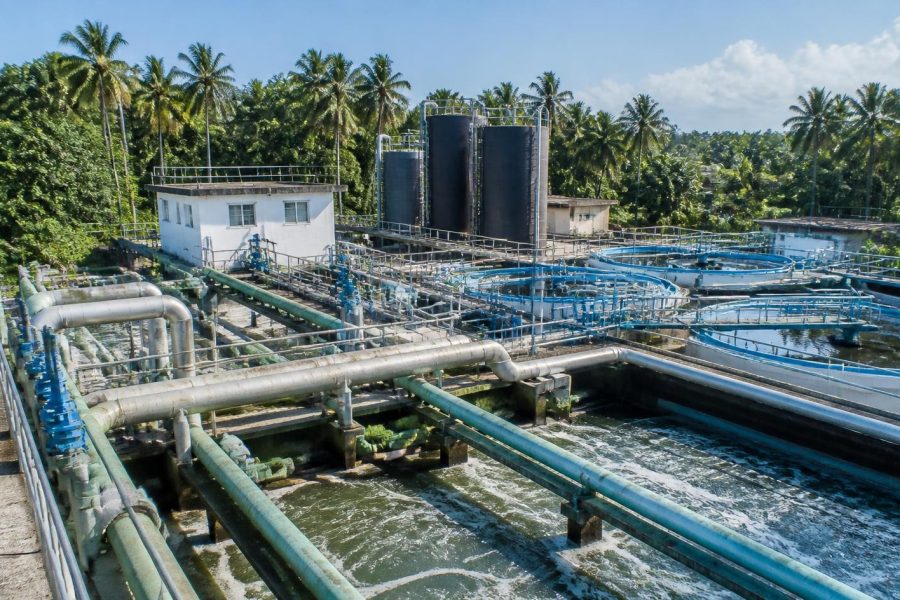
Choosing the right water filtration system starts with your water source, contaminants, daily demand, and intended use. Charcol Water provides water treatment and filtration solutions for homes, businesses, and industries across Kochi and Kerala, including treatment plants, RO systems, softeners, water testing, cartridges, wastewater treatment, and maintenance.The difference isn’t simply filter size. It comes down to application, capacity, water-quality requirements, and system design.
Industrial Water Filters
Industrial filters treat water for manufacturing, boilers, cooling systems, and other high-demand processes. They usually combine several treatment stages rather than a single filter, such as:
- Sediment or multimedia filtration
- Activated carbon
- Water softening
- Reverse osmosis (RO)
- Demineralisation (DM)
- Chemical dosing
Water quality needs vary widely by process, so the design should begin with water testing and application analysis, not just capacity.
Commercial Water Filters
Commercial filters serve businesses and institutions such as restaurants, hotels, offices, clinics, schools, and commercial kitchens. They typically address sediment, hardness, taste, and odour for everyday operations, drinking water, and facility use.
Industrial vs Commercial Water Filter: Key Differences
Although industrial and commercial filtration systems can use some of the same technologies, their design objectives can differ significantly.
These are general distinctions rather than absolute rules. A large hotel, hospital, or commercial complex can require a sophisticated water treatment system, while some smaller industrial applications may need relatively simple filtration.The right solution should therefore be based on water quality, flow rate, daily demand, application, and required treated-water quality.
Factor | Industrial Water Filter | Commercial Water Filter |
Primary use | Manufacturing and industrial processes | Business and institutional operations |
Water demand | Often high or continuous | Usually moderate to high |
System design | Process-specific and application-focused | Designed around commercial usage |
Treatment stages | May involve multiple technologies | Depends on water quality and end use |
Water quality requirements | Can be highly specific | Determined by operational requirements |
Monitoring | May require detailed monitoring | Depends on system and application |
Maintenance | Can involve multiple components | Depends on equipment and usage |
Typical applications | Factories, boilers, cooling, production | Hotels, restaurants, offices, hospitals |
Why Water Quality Testing Matters Before Choosing a Filter
Understanding your incoming water is the most important step in choosing a filter. Borewell, municipal, surface, and process water differ in suspended solids, hardness, dissolved salts, metals, and microorganisms, so two facilities can need completely different systems. For industries, testing also flags scaling, corrosion, and fouling risks.
Charcol’s Green Metrics Labs, approved by the Kerala State Pollution Control Board, offers physical, chemical, and microbiological analysis for:
- Drinking, well, and bore water
- Wastewater and industrial effluent
- Swimming pool and construction water
- Boiler, cooling tower, and manufacturing water
A reliable process runs: Test → Analyse → Design → Treat → Monitor → Maintain. Test first, then choose the filtration technology that fits the results.
Which Filtration Technologies Are Used?
There is no single filtration technology that is suitable for every water source or application. Different treatment technologies address different water-quality requirements.
Sediment and Multimedia Filtration
Sediment and multimedia filtration can help reduce suspended particles and sediment. These systems may form part of a larger commercial or industrial water filtration system when particulate removal is required.
Activated Carbon Filtration
Activated carbon filtration can be used for specific water-quality objectives, including reducing certain taste, odour, and organic compounds. Its suitability depends on the contaminants present and the overall treatment design.
Water Softeners
Water softeners are used to address hardness-causing minerals. In commercial and industrial environments, reducing hardness can help manage scale formation and support the performance of plumbing and equipment.
Charcol Water provides water softener systems as part of its water-treatment solutions.
Reverse Osmosis Systems
Industrial RO systems use membrane technology to reduce dissolved salts and other contaminants. RO can be appropriate where a higher level of water purification is required.
Charcol Water provides RO systems ranging from compact units to larger industrial RO plants, with applications listed for apartments, hotels, hospitals, factories, laboratories, and other facilities.
Demineralisation Systems
Some industrial and laboratory applications require water with very low mineral content. DM water systems can produce demineralised water for suitable applications.
Charcol lists DM water systems for laboratories, boilers, and industrial applications.
Industrial Filtration Is About More Than Filter Size
More Than Filter Size
An industrial filter isn’t just a bigger commercial one. Industrial treatment is engineered around the application, factoring in flow rate, water source, contaminants, end use, required water quality, space, maintenance, and operating costs. A factory needing boiler feed water, for example, requires a very different setup from a commercial kitchen. That’s why industrial water filtration systems in Kerala should be chosen based on actual water conditions and application needs, not equipment size alone.
When Should You Choose a Commercial Water Filtration System?
A commercial water filter may be appropriate when the primary requirement is reliable water treatment for a business, institution, or commercial property.A restaurant may need filtration for kitchen operations and drinking water. A hotel may require treatment for guest facilities and equipment. An office may need drinking-water purification, while a healthcare facility may have more specific water-quality requirements.The system should be selected according to water quality, capacity, usage, and intended application.Charcol provides water cartridges, Jumbo and Slim filters, water purifiers, RO systems, water softeners, and other water-treatment solutions for different applications.
When Do You Need an Industrial Water Filtration System?
An industrial filtration system becomes particularly relevant when treated water is an important part of a manufacturing or industrial process.
Applications can include manufacturing facilities, boiler feed-water treatment, cooling-water treatment, industrial process water, equipment protection, production operations, laboratories, and high-volume water applications.
Industrial water treatment can also extend beyond filtration. Depending on the wastewater or process involved, facilities may require RO, chemical dosing, demineralisation, wastewater treatment, or other technologies.
Water Treatment Services Available from Charcol Water
Choosing the correct filtration system is only one part of effective water management. Depending on the application, a property or facility may need testing, treatment, filtration, wastewater management, or ongoing maintenance.
Charcol Water provides a range of services for residential, commercial, and industrial requirements across Kerala.
Water Treatment Plants
Charcol provides custom water treatment plants designed around water quality, capacity, and application requirements. These can serve residential, commercial, and industrial facilities.
Wastewater Treatment Plants
Charcol provides STP and ETP solutions for sewage and industrial effluent treatment. These systems are designed to support wastewater treatment, reuse, and responsible discharge according to the relevant requirements.
RO Systems
Reverse osmosis systems are available for applications ranging from domestic and commercial water purification to larger industrial requirements.
Water Softener Systems
Water softeners can help address hardness and scale-related problems in suitable applications.
Chemical Dosing Systems
Chemical dosing pumps can be used for controlled chemical addition in appropriate water-treatment processes.
Water Filter Cartridges and Filter Housings
Charcol provides water cartridges and Jumbo or Slim filters for sediment and particulate filtration applications.
DM Water Systems
DM water systems are available for applications requiring demineralised water, including industrial and laboratory environments.
Swimming Pool Filtration
Charcol also provides swimming pool filtration systems designed for maintaining clean and hygienic pool water.
AMC and Maintenance Services
Preventive maintenance and AMC services can help businesses and institutions maintain the performance of their water-treatment equipment over time.
Best Water Testing Lab in Kochi for Water Quality Analysis
If your water quality or treatment need is uncertain, test before choosing a filter. Charcol’s Green Metrics Labs in Edappally, Ernakulam, Kochi tests water for homes, offices, and industries, including drinking, well and bore, wastewater, industrial effluent, swimming pool, construction, and dialysis water. For industrial treatment in Kochi and Kerala, testing parameters such as TDS, conductivity, hardness, iron, silica, sulphate, and alkalinity guide system selection.
How to Choose the Right Water Filtration System
- Identify the source: borewell, municipal, surface, or other.
- Test the water for physical, chemical, and microbiological characteristics.
- Define the application: drinking, food preparation, manufacturing, boiler feed, cooling, lab use, or wastewater reuse.
- Determine flow rate and required treated-water quality.
- Consider maintenance, operating costs, replacements, and service support.
This approach is more dependable than choosing by TDS, price, brand, or equipment size alone.
How Charcol Water Can Help
Selecting a water filter without understanding the water condition can lead to inadequate treatment, unnecessary operating costs, or performance problems.
Charcol Water combines water testing, filtration, treatment, installation, and maintenance services to address different water-quality requirements. Its service portfolio covers WTP, STP/ETP, RO systems, water softeners, chemical dosing pumps, water testing, filter cartridges, Jumbo and Slim filters, water purifiers, DM water systems, swimming pool filtration, and AMC and maintenance.
Its water-testing division, Green Metrics Labs, provides laboratory analysis for residential, commercial, industrial, wastewater, and environmental applications.
Conclusion
The difference between industrial and commercial water filters comes down to application, capacity, water-quality needs, and system design. Commercial filtration serves businesses and institutions, while industrial filtration is engineered for manufacturing, boilers, cooling systems, and laboratories. The right choice shouldn’t rest on the label alone. Water testing, flow requirements, and treated-water quality should guide the decision.
For businesses across Kochi and Kerala, Charcol Water offers water treatment plants, RO systems, softeners, wastewater treatment, DM systems, water testing through Green Metrics Labs, and AMC services, including water filter service in Alappuzha.
Frequently Asked Questions
Industrial water filters are generally designed for industrial processes, higher water demand, and application-specific water-quality requirements. Commercial filters are generally used by businesses and institutions for operational, drinking, kitchen, or facility-related water needs.
Sometimes, but not automatically. The filter must have suitable capacity, construction, flow rate, and treatment capability for the application. Industrial water requirements should be assessed before selecting equipment.
Neither category is universally better. The appropriate choice depends on the water source, contaminants, flow rate, daily consumption, intended use, and required treated-water quality.
No. RO is one treatment technology among several. Whether it is required depends on the water-quality parameters and desired output quality. Water testing can help determine whether RO is appropriate.
Start by testing the incoming water. Then consider the water source, required flow rate, operating hours, application, contaminants, treated-water quality, available space, maintenance requirements, and operating costs.
COME VISIT US
29/298 A Unichira Thaikavu Road, Changampuzha Nagar, Edapally Ernakulam
SEND US A MESSAGE
General: info@charcol.in Sales: sales@charcol.com