
Commercial Water Quality Testing: A Facility Manager’s Guide
Water quality is an important part of managing any commercial property. From offices and hotels to hospitals, restaurants, educational institutions and industrial facilities, water may pass through storage tanks, pipelines, filtration units, RO systems, cooling equipment, kitchens and multiple points of use.
Although incoming water may appear clean, changes in its chemical composition, physical characteristics or microbiological quality are not always visible. Regular water quality monitoring can help facility teams identify such changes and make informed decisions about maintenance, treatment and system performance.
For commercial properties, the right monitoring programme should be based on the building’s water sources, applications, treatment systems and potential risks. This approach provides a clearer picture of water quality over time rather than relying on occasional inspections.
Why Water Quality Monitoring Matters in Commercial Buildings
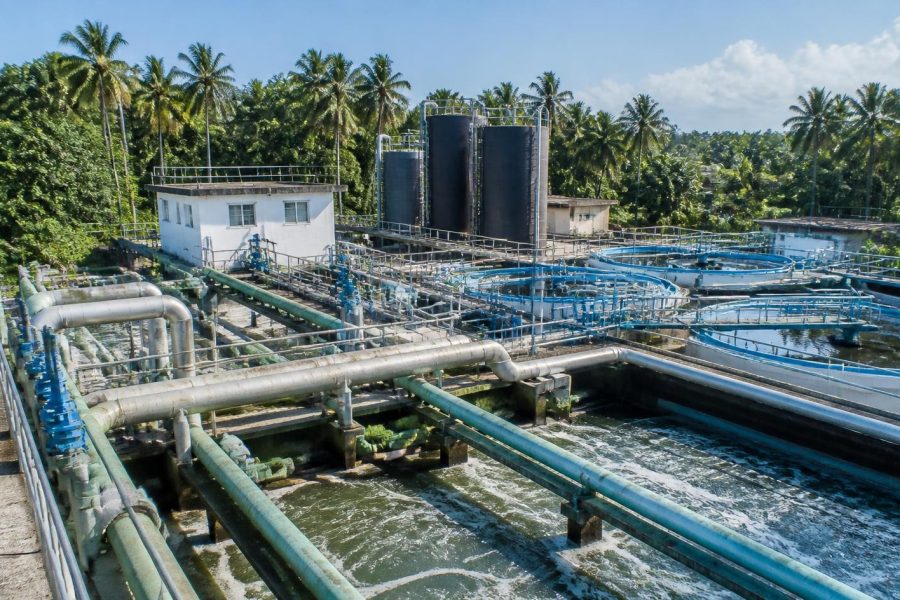
Commercial properties typically have more complex water systems than residential buildings. A single facility may have multiple storage tanks, pumps, filters, softeners, RO units, dosing systems and wastewater treatment equipment.
Because of this complexity, a change at one point in the system can affect water quality or equipment performance elsewhere.
A structured monitoring programme can help facility teams:
- Identify changes in water characteristics
- Detect potential microbiological contamination
- Track important chemical and physical indicators
- Evaluate filtration and treatment performance
- Recognise conditions that may contribute to scaling or corrosion
- Monitor wastewater treatment processes
- Maintain useful historical records
- Support maintenance and treatment decisions
The requirements will not be the same for every property. A hotel, commercial kitchen, hospital, office building and manufacturing facility can have very different water sources and applications. Testing should therefore be based on the actual conditions and intended use of the water.
Key Parameters to Include in a Commercial Water Quality Assessment
There is no single set of parameters that applies to every commercial property. The appropriate analysis depends on the source, intended application, treatment equipment, building type and potential risks.
A qualified laboratory can help determine which indicators are relevant to a particular facility.
1. Physical Characteristics
Physical parameters can provide an early indication that something has changed within a water system.
Common indicators include:
- Colour
- Odour
- Taste
- Turbidity
- Temperature
- Total dissolved solids (TDS)
- Conductivity
Changes in colour, odour or turbidity may indicate issues involving the incoming supply, storage tanks, pipework or treatment equipment.
TDS and conductivity can also be useful for tracking changes in dissolved substances and assessing trends in certain treatment processes. However, these measurements should be considered alongside other relevant parameters rather than being used as a complete assessment on their own.
2. Chemical Composition
Chemical analysis provides a more detailed understanding of what is present in the water.
Depending on the application, relevant parameters may include:
- pH
- Hardness
- Iron
- Chloride
- Sulphate
- Nitrate
- Fluoride
- Calcium
- Magnesium
- Alkalinity
- Silica
- Phosphorus
Some of these indicators become particularly important in facilities using water for boilers, cooling systems or manufacturing processes.
For example, hardness, alkalinity, silica and conductivity can be relevant when evaluating conditions associated with scale formation, corrosion or equipment performance.
The required parameters should always be selected according to the actual application rather than testing for every possible indicator without a clear purpose.
3. Microbiological Quality
Clear-looking water is not necessarily free from microorganisms.
Where water is used for drinking, food preparation or other applications involving human consumption or exposure, microbiological analysis can be an important part of the monitoring programme.
Depending on the application and risk profile, analysis may include:
- Total coliforms
- E. coli
- Other relevant microbiological indicators
The results should be interpreted in accordance with the applicable water-quality requirements. Visual appearance, taste or odour alone cannot provide sufficient assurance of microbiological quality.
4. Wastewater and Effluent Quality
Commercial facilities operating sewage treatment plants or effluent treatment systems may also need to monitor treated wastewater.
Depending on the system and intended discharge or reuse, analysis may include:
- BOD
- COD
- Oil and grease
- Suspended solids
- Nitrogen
- Other application-specific pollutants
These measurements can help evaluate whether an STP or ETP is functioning as expected and whether process adjustments, maintenance or further investigation may be necessary.
Charcol’s water testing facility provides wastewater analysis for STP/ETP applications and industrial effluent testing.
When Should a Commercial Facility Conduct Water Analysis?
The appropriate monitoring frequency depends on the property’s water sources, usage, treatment systems and risk profile. Instead of following the same schedule for every building, facility teams should establish a programme suited to their individual requirements.
Additional analysis may be useful in the following situations.
During Routine Monitoring
Periodic checks can establish a baseline for the building’s water quality. Comparing current results with previous reports can make gradual changes easier to identify.
After Treatment or Equipment Changes
Filters, RO membranes, softeners, dosing systems and other treatment components may affect water characteristics. Analysis after maintenance or replacement can help determine whether the system is performing as expected.
When Water Characteristics Change
Unexpected changes in colour, taste, odour or turbidity should be investigated rather than dismissed as temporary issues.
After Plumbing or Storage Work
Tank cleaning, pipe repairs and modifications to the water network can create situations where additional assessment may be appropriate.
When Contamination Is Suspected
Unusual water quality reports from occupants or a suspected contamination event may require professional laboratory assessment to determine what has changed.
For STP and ETP Monitoring
Facilities with wastewater treatment systems may require ongoing analysis to evaluate treatment performance and support applicable environmental requirements.
The purpose of monitoring is not simply to accumulate laboratory reports. The value comes from using the results to identify trends, investigate problems and make better maintenance decisions.
How Laboratory Analysis Supports Facility Management
A visual inspection can identify obvious problems, but laboratory analysis can provide information that cannot be determined by appearance alone.
Green Metrics Labs, Charcol’s water-testing division, provides analytical services for drinking water, wastewater, industrial and environmental applications. Its stated capabilities include testing for drinking water, well and bore water, wastewater, industrial effluent, swimming pool water, construction water, industrial application water and dialysis water.
Testing Results Should Lead to Action
Laboratory analysis can identify a potential water-quality issue, but the report itself is not always the solution.
For example, results may show elevated hardness, higher TDS, suspended solids or another concern. Depending on the underlying cause and intended application, the appropriate response could involve:
- Filtration
- Water softening
- Reverse osmosis
- Chemical dosing
- Equipment maintenance
- Treatment-process adjustments
- Replacement of specific treatment components
This is why water-quality assessment works best as part of a broader management strategy.
Charcol provides commercial and industrial water solutions that include water treatment plants, wastewater treatment plants, RO systems, water softeners, chemical dosing pumps, water cartridges, jumbo and slim filters, DM water systems and AMC/maintenance services.
Its treatment solutions are designed around different applications, with systems available for commercial and industrial requirements. Its RO solutions can also be used in applications such as hotels, hospitals, factories and laboratories.As a result, laboratory findings can be useful when a facility is evaluating filtration maintenance, treatment upgrades or a new commercial water treatment system.
How to Create an Effective Water Monitoring Plan
A practical monitoring programme should begin with a clear understanding of the building’s complete water network.
Facility teams should identify:
- Water sources – Determine whether the property receives water from a municipal supply, borewell, tanker or another source.
- Storage locations – Record tanks, reservoirs and other points where water is stored.
- Treatment equipment – Document filters, softeners, RO units, dosing systems and other treatment components.
- Critical usage points – Identify drinking-water outlets, kitchens, process areas and other important points of use.
- Wastewater systems – Record STPs, ETPs and water-reuse systems where applicable.
- Previous results – Maintain historical reports so current findings can be compared with earlier measurements.
- Maintenance records – Document repairs, replacements and other actions taken after abnormal results.
Keeping these records together makes it easier to identify trends.
For instance, a gradual increase in hardness or conductivity may indicate a different issue from a sudden change in the same parameter. Looking at results over time can therefore provide more useful information than treating every report as an isolated event.
Choosing a Water Quality Testing Partner
For a commercial facility, selecting a laboratory should involve more than comparing the price of individual tests.
Consider factors such as:
- Relevant analytical capabilities
- Qualified laboratory personnel
- Suitable testing infrastructure
- Clear and understandable reports
- Experience with commercial and industrial applications
- Ability to relate findings to treatment requirements
- Support for ongoing water-quality management
Green Metrics Labs offers analysis across drinking water, wastewater and industrial applications, while Charcol’s wider portfolio includes treatment, filtration, RO, softening and maintenance solutions.
This combination can be useful for facilities that need to move from identifying a water-quality concern to determining an appropriate treatment or maintenance response.If you are responsible for water systems in a commercial building, the right laboratory assessment can provide useful information for planning maintenance, evaluating treatment performance and managing water quality more effectively.
Conclusion
Effective water management in a commercial property requires more than checking whether water looks clean. A structured monitoring programme can provide valuable information about physical characteristics, chemical composition, microbiological quality and wastewater treatment performance.
For facility managers, analysing results over time can help identify changes earlier, support maintenance planning and provide a better understanding of how treatment systems are performing.
Charcol Water combines laboratory analysis with solutions for filtration, treatment, RO, softening and maintenance, allowing businesses to approach water management from both a testing and treatment perspective.
Frequently Asked Questions
It can assess physical, chemical and microbiological characteristics of water. The specific parameters required depend on the source, intended use, treatment systems and requirements of the facility.
There is no single frequency suitable for every property. The monitoring schedule should consider the water source, usage, treatment equipment, risk factors, applicable requirements and previous results.
No. TDS is only one indicator. Depending on the application, a more complete assessment may require physical, chemical and microbiological parameters.
Monitoring treated wastewater can help evaluate STP performance and identify potential treatment issues. The appropriate parameters depend on the facility and its discharge or reuse requirements.
Testing before and after treatment can provide useful evidence about changes in water quality and treatment performance. However, additional technical assessment may be needed to determine the exact cause of a problem.
COME VISIT US
29/298 A Unichira Thaikavu Road, Changampuzha Nagar, Edapally Ernakulam
SEND US A MESSAGE
General: info@charcol.in Sales: sales@charcol.com